Listed CE models
CE5 · CE7 · CE10 · CE14
Certification applies to the listed models and capacities. It does not extend to CE21, CE30 or CE6KG.
View models in the NSF listing
DECENTRALIZED WASTEWATER TREATMENT
Japanese technology
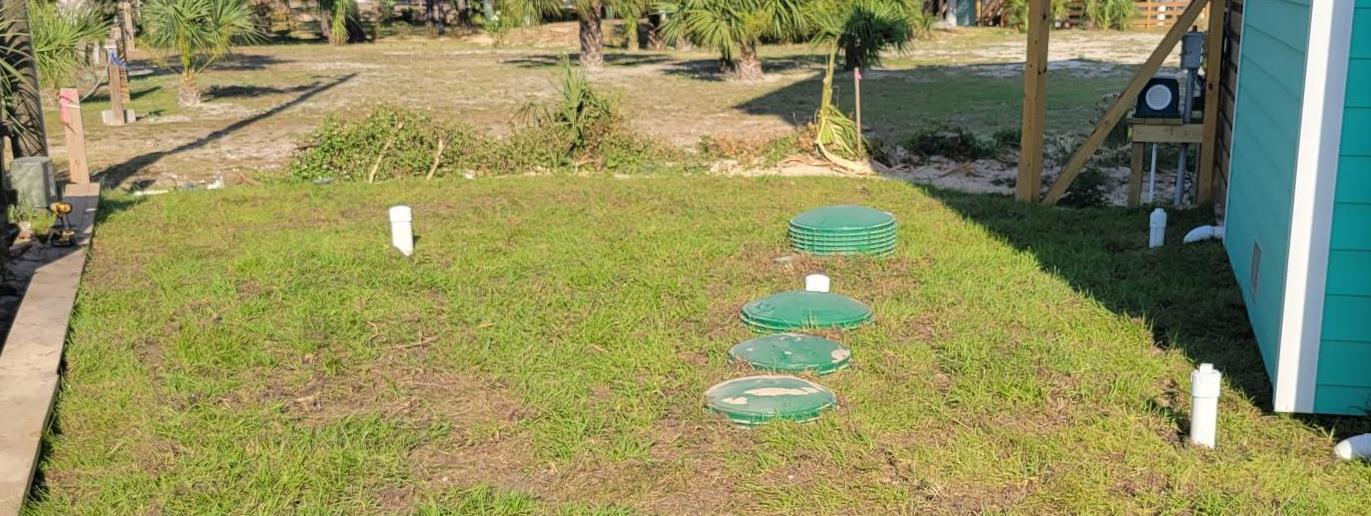
FUJICLEAN · MODEL-SPECIFIC CERTIFICATIONS
CE5 · CE7 · CE10 · CE14
Certification applies to the listed models and capacities. It does not extend to CE21, CE30 or CE6KG.
View models in the NSF listingCEN5 · CEN7 · CEN10 · CEN14
CRXII-5 · CRXII-7 · CRXII-10
The scope covers nitrogen reduction; it does not by itself certify phosphorus removal or water reuse.
View models in the NSF listingCertification applies to specific FujiClean systems, not to Grupo Aberdeen or the entire catalogue. Approval for each project in El Salvador is verified separately.
UNDERSTAND THE PROCESS
The manufacturer's video introduces the CE and CEN systems. Then explore the capacities and technical documents for each model.
View CE5 through CE6KGThe YouTube player loads only when you select the button. The video plays in its original language. Spanish subtitles may not be available.
MANUFACTURER VIDEO
The manufacturer's introduction to the CE and CEN treatment process. This animation does not show CE6KG specifically.
Video provided by the manufacturer.
THE WATER, STEP BY STEP
One continuous path. Water moves through treatment, while some returns to the start to continue the process.
CE / CEN · Biological treatment
From wastewater inlet to treated effluent outlet. The numbers connect the equipment cutaway to the explanation of each stage.
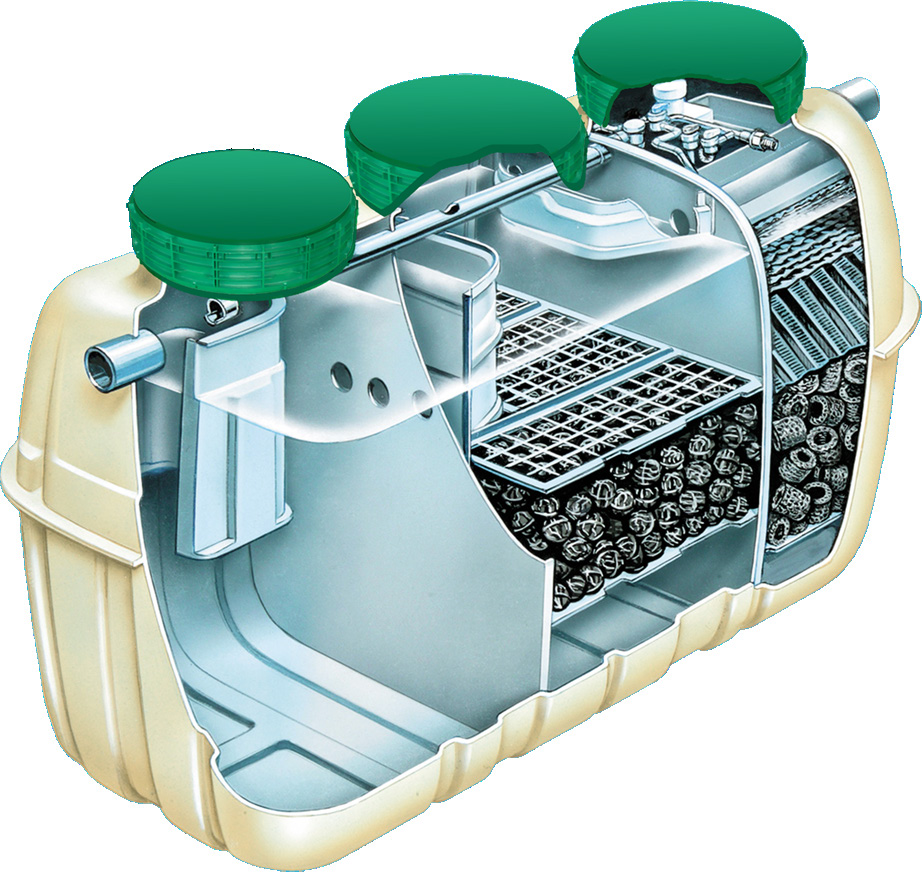
Solids and grease are separated.
Biological treatment without added air.
Contact media supplied with oxygen.
Final solids separation.
Optional stage, if specified for the project.
Water and sludge return from the aerobic zone to sedimentation. Recirculation contributes to nitrogen treatment; CE and CEN have different design specifications.
Controlled discharge. A second airlift helps regulate discharge; an overflow weir provides an additional outlet as the water level rises.
Treated does not mean drinking water. Disinfection, discharge and reuse are determined by the project and applicable regulations.
Reference for CE5, CE7, CE10, CE14, CE21 and CE30; CEN5, CEN7, CEN10, CEN14 and CEN21. This does not depict CE6KG, CEN50 or CRXII. It is not to scale and does not replace the model drawing.
In the aerobic zone, ammonium is converted to nitrates. Recirculation lets water pass through the anaerobic zone again, where denitrification can occur. The manufacturer describes 2–4 times the influent flow for CE and 4–6 times for CEN; these are design references, not universal settings.
The system’s daily capacity does not specify how long each litre remains in the tank. Chlorine-tablet disinfection is optional. Treated effluent is not presented as drinking water.
FUJIMAC · LINEAR DIAPHRAGM BLOWERS
The blower supplies air. The system puts it to work in treatment.
FujiMAC supplies air to the aerobic zone of the FujiClean system and to the airlifts that move water through the process. Correct blower selection and maintenance help keep treatment working.
Supply oxygen for biological treatment.
Power the airlifts within the process.
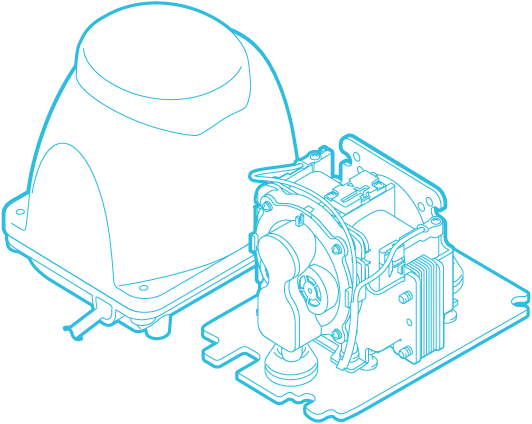
Aeration is one part of the complete process. Air alone does not make water safe to drink, reuse or discharge.
AIRFLOW + PRESSURE + POWER SUPPLY
Compare airflow and pressure together. A replacement must match the model specified for the system, the power supply and air-line conditions. Higher catalog airflow does not automatically make a blower a suitable replacement.

AC 120 V · 60 Hz
AC 120 V · 60 Hz
AC 120 V · 60 Hz
AC 120 V · 60 Hz
Data from individual FujiMAC specifications Ver.200806, page 2, for 120 V / 60 Hz. Consumption is stated at the indicated pressure: it is not shaft power or whole-system consumption. Actual airflow depends on voltage and backpressure. Confirm configuration and availability before ordering.
The specifications state 120 V ±10 V and a working pressure within ±20% of each model’s reference pressure. MAC150RII and MAC200RII use 20 kPa from their individual specifications, rather than 18 kPa in the generic web table. Always check the installed unit’s nameplate and manual.
READING PERFORMANCE
The curve shows how much air each model delivers at different pressures. Check the system’s operating point, not just the model number.
TopAirflow in CFM · pressure in PSI
BottomAirflow in L/min · pressure in kPa
The curve does not authorize operation outside the manufacturer’s permitted range. Each original document includes specifications, a performance curve and a dimensional drawing.
FujiClean USA technical libraryAC 120 V · 60 Hz · 68 °F (20 °C)
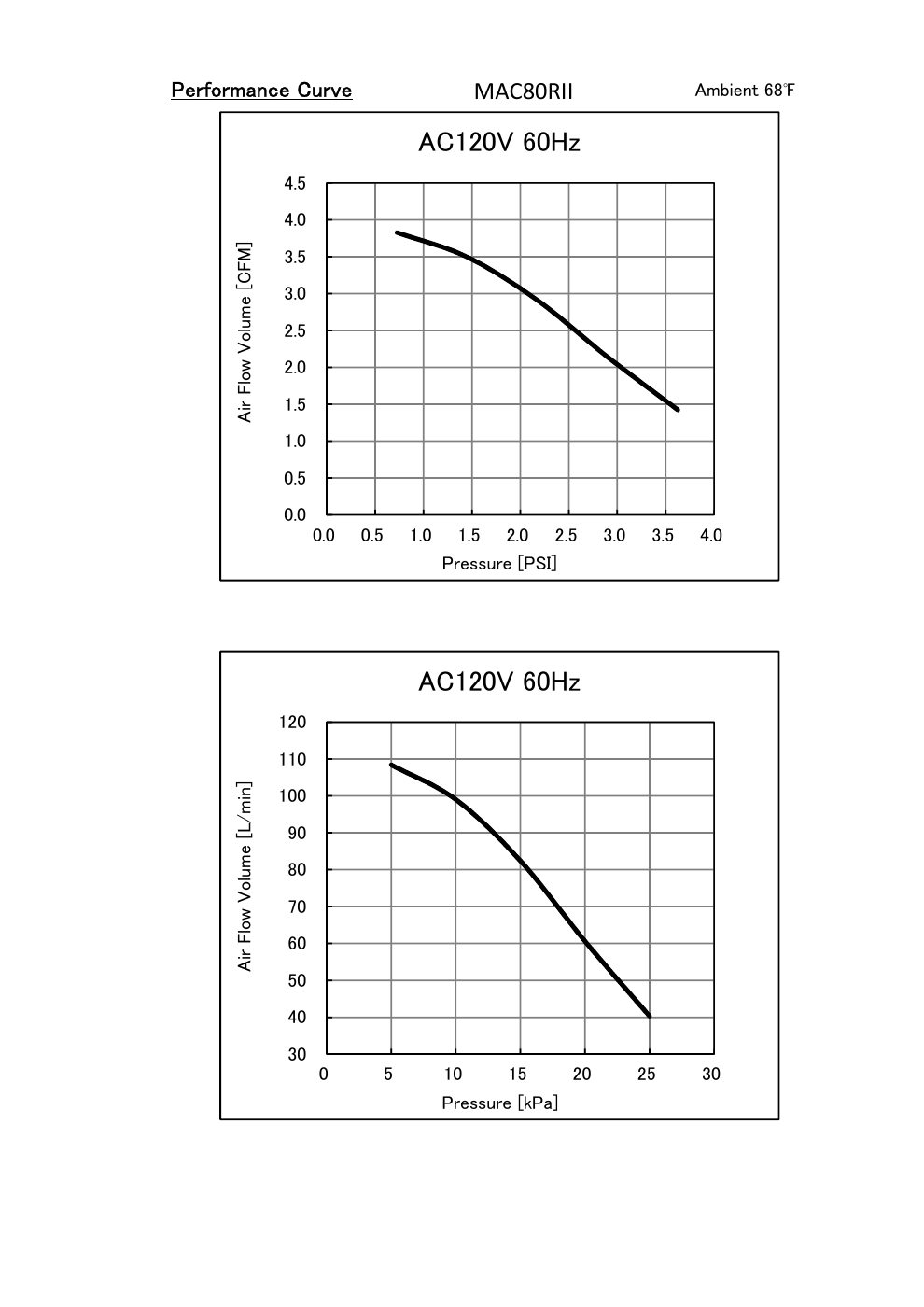
AC 120 V · 60 Hz · 68 °F (20 °C)
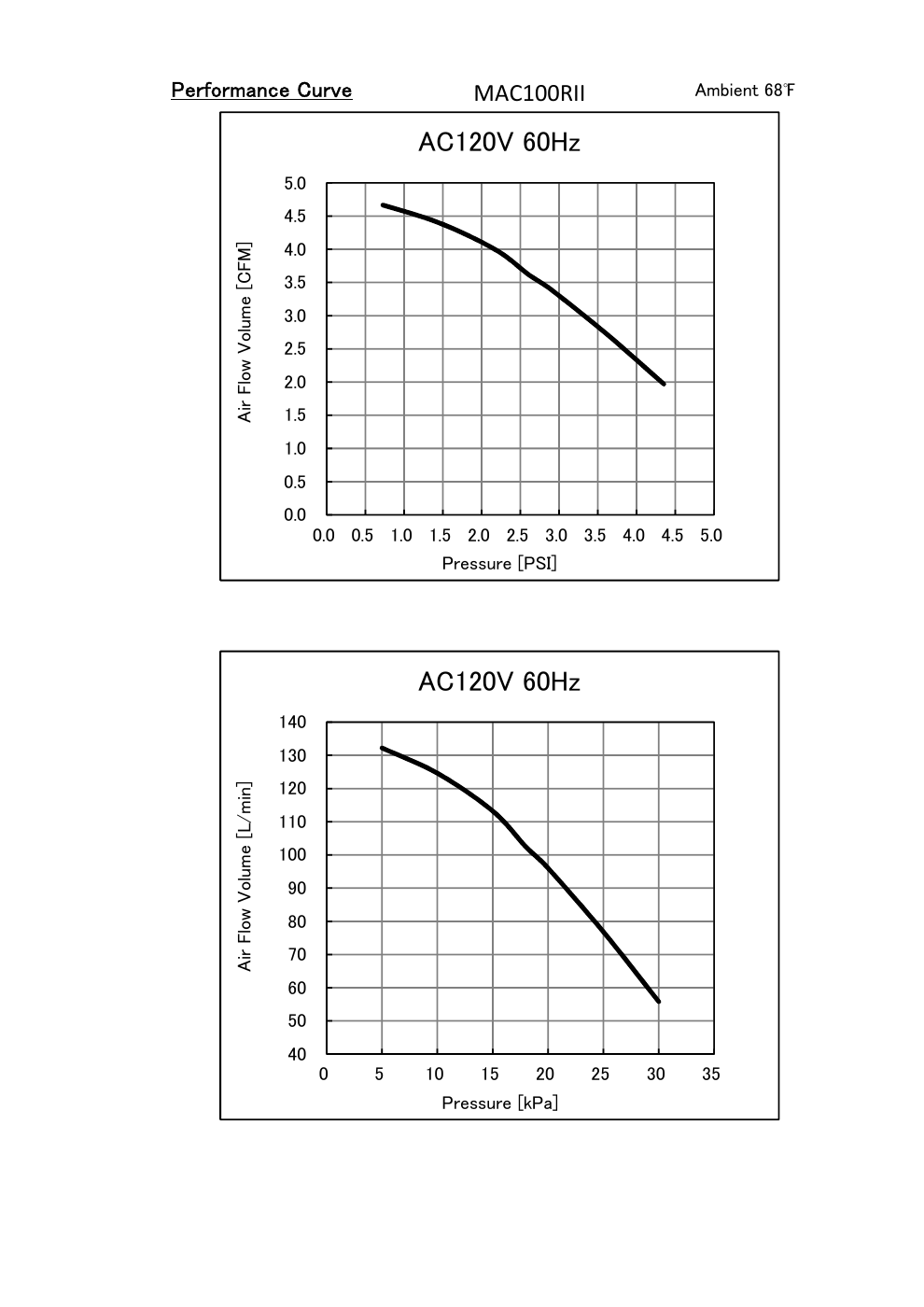
AC 120 V · 60 Hz · 68 °F (20 °C)
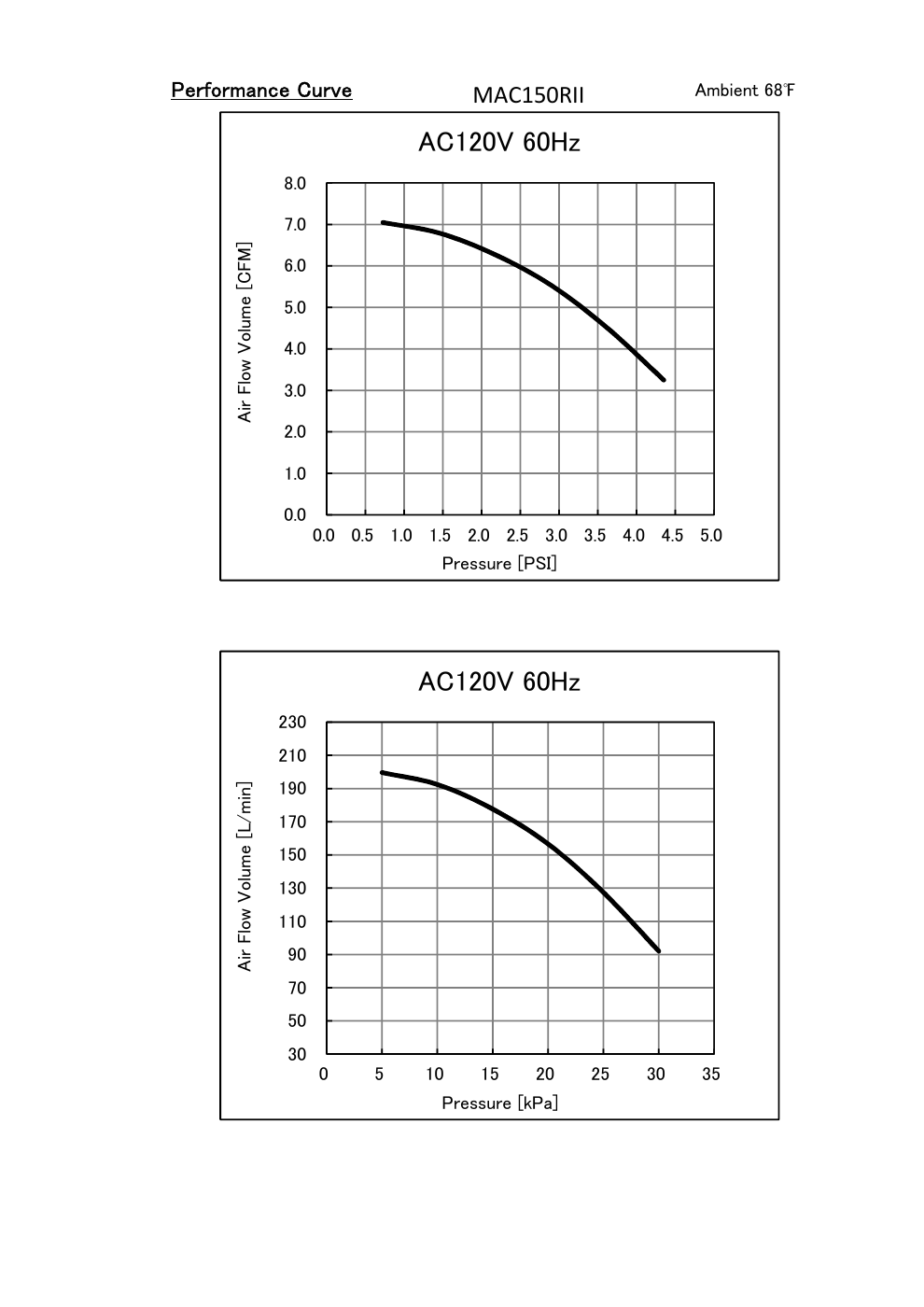
AC 120 V · 60 Hz · 68 °F (20 °C)
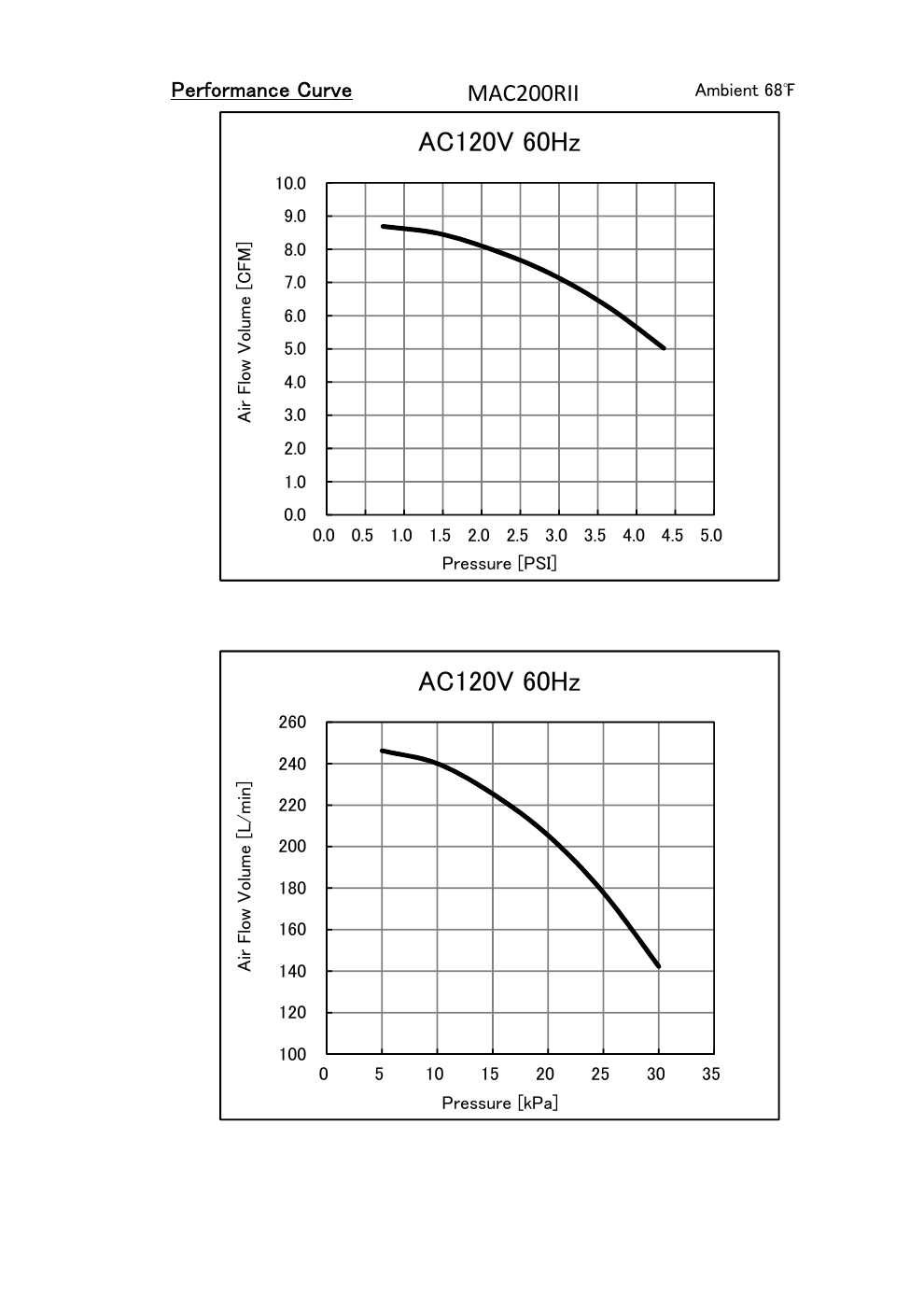
BLOWER MAINTENANCE
A dirty filter can reduce airflow and contribute to overheating. Unusual noise or vibration, an alarm, or reduced aeration calls for inspection. A stopped blower should not be left unattended.
Confirm the procedure and parts for your model. The kit may vary by model, version and serial number.
Manufacturer manual · maintenance, p. 7JAPANESE TECHNOLOGY · MODEL-SPECIFIC TESTING
Founded in Japan in 1961 and headquartered in Nagoya, FujiClean develops compact wastewater treatment systems that combine biological processes with contact media. Model-specific documentation supports system selection and maintenance.
Learn about FujiClean's originsRESIDENTIAL TREATMENT
CE5, CE7, CE10 and CE14 appear in the NSF listing reviewed. Certification applies only to the models, capacities and conditions specified in that listing, not to the entire FujiClean range.
View certified models and capacitiesNITROGEN REDUCTION
CEN5, CEN7, CEN10, CEN14 and CRXII-5, CRXII-7 and CRXII-10 are listed for nitrogen reduction. The standard requires at least a 50% reduction in total nitrogen under its test protocol.
NSF/ANSI 245 certification alone does not cover phosphorus removal or effluent reuse, nor does it authorize discharge in El Salvador.
View the nitrogen reduction listingA LOWER THRESHOLD, WITH A DEFINED SCOPE
NSF/ANSI 40 Class I sets a total suspended solids (TSS) criterion of 30 mg/L as a 30-day average. RTS 13.05.01:24 sets a limit of 60 mg/L for domestic wastewater (classified as “ordinary” under the RTS) discharged into a receiving environment.
The NSF value is numerically lower, but the assessment protocols differ. RTS Table 2 has no corresponding numerical requirement for the nitrogen reduction assessed under NSF/ANSI 245.
TSS · 30-day average
FujiClean's published test summary reports these average effluent concentrations in mg/L. They are test results, not certification limits or guaranteed performance for every installation.
| Model | BOD/CBOD* | TSS | Total nitrogen |
|---|---|---|---|
| CE5 | 11 | 13 | 10 |
| CEN5 | 5 | 6 | 10 |
The summary reports tests at 450 U.S. gallons/day, with wastewater fed directly to the system and no upstream septic tank. This test flow rate should not be confused with each model's current rated capacity.
The source uses the label “BOD/CBOD.” The carbonaceous BOD measured in the NSF test is not treated here as equivalent to the BOD₅ parameter in the RTS. These results are therefore not used to establish compliance with that RTS parameter.
This comparison refers to Table 2 of RTS 13.05.01:24 for domestic wastewater (classified as “ordinary” under the RTS) discharged into a receiving environment. Compliance depends on flow rate, wastewater load, system configuration, operation, sampling and the required authorizations. Individual domestic wastewater systems that use soil infiltration are outside the scope of this RTS. Reuse requires specific evaluation and authorization. Non-domestic wastewater (the “special” category) and sewer discharges are subject to separate requirements.
GRUPO ABERDEEN EXPERIENCE
From small and medium-sized businesses to public healthcare: FujiClean experience in El Salvador to inform treatment selection, effluent use or discharge, and day-to-day operation.
COMMERCIAL PROPERTIES AND DEVELOPERS
Local experience: FujiClean CE10 at a commercial property in El Salvador.
FujiClean’s published results apply to specific models and test conditions. Reuse does not mean the water is potable.
Assess the feasibility of water reuse Review results and certifications by modelView experience by sector and upcoming projects
Explore installation examples: an above-ground CE21, a CE30 for a tourism facility and a CE5 with civil works in progress.
View FujiClean projectsFUJICLEAN · NUTRIENT CONTROL
Two additional product families address different nutrient-treatment goals: CEN for advanced nitrogen reduction and CRXII for combined nitrogen and phosphorus treatment.
CEN · NITROGEN
Contact media and continuous recirculation support nitrogen removal from domestic-strength wastewater. System selection depends on flow rate and wastewater load.
Compare CEN models at FujiClean USA| Model | Rated flow | Reference |
|---|---|---|
| CEN5 | 500 | NSF/ANSI 245 listing |
| CEN7 | 700 | NSF/ANSI 245 listing |
| CEN10 | 1,000 | NSF/ANSI 245 listing |
| CEN14 | 1,350 | NSF/ANSI 245 listing |
| CEN21 | 1,900 | Model listed by the manufacturer |
| CEN50 | 4,500 | Check availability |
CEN5, CEN7, CEN10 and CEN14 appear in the current NSF/ANSI 245 listing. No such certification claim is made here for CEN21 or CEN50. The manufacturer asks customers to confirm CEN50 availability.
CRXII · NITROGEN AND PHOSPHORUS
CRXII combines biological treatment with electrocoagulation using iron electrodes. Phosphorus binds into compounds that settle with the sludge and are removed during maintenance.
Phosphorus treatment is built into the system. The electrodes must be inspected and replaced as their condition requires.
CRXII · Nitrogen and phosphorus
From wastewater inlet to treated effluent outlet. The numbers connect the equipment cutaway to the explanation of each stage.
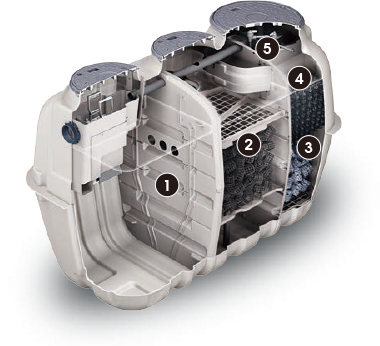
Solids and grease are separated.
Biological treatment without added air.
Contact media supplied with oxygen.
Final zone from which discharge is regulated.
Final stage according to the project configuration.
Water recirculates from the treated-water zone to the first chamber. An airlift regulates discharge; the manufacturer’s diagram also includes overflow.
The iron device is located in the initial zone. Electrolysis forms insoluble phosphorus compounds that are retained with the sludge and removed during maintenance.
NITROGEN + PHOSPHORUS
450U.S. gallons/day
Rated capacity in the current NSF listing. Approximately 1.70 m³/day.
Ask about CRXII-5NITROGEN + PHOSPHORUS
640U.S. gallons/day
Rated capacity in the current NSF listing. Approximately 2.42 m³/day.
Ask about CRXII-7NITROGEN + PHOSPHORUS
900U.S. gallons/day
Rated capacity in the current NSF listing. Approximately 3.41 m³/day.
Ask about CRXII-10The U.S. CRXII data sheet, revised February 16, 2024, reports effluent reference values for treatment of domestic-strength influent: BOD and TSS <10 mg/L, total nitrogen <20 mg/L and total phosphorus <2 mg/L. These are the manufacturer's design values, not guaranteed results for every installation.
The capacities shown here follow the current NSF listing: 450, 640 and 900 U.S. gal/day. The 2024 data sheet lists 630 U.S. gal/day for the middle model. Confirm the model and configuration when preparing the project specification.
CRXII-5, CRXII-7 and CRXII-10 are listed under NSF/ANSI 40 Class I and NSF/ANSI 245. Standard 245 assesses nitrogen reduction. That certification alone does not cover phosphorus removal, drinking-water quality or effluent reuse, nor does it provide local discharge authorization.
Availability, installation, operation and local compliance must be confirmed for each project.
CE CATALOG · SEVEN MODELS
Compare capacity, dimensions and energy use, with links to the manufacturer's documentation. Select a model to see its specifications.
CE6KG · COMMERCIAL SYSTEM
Explore the CE6KG interior, from initial solids separation to treated-water discharge.
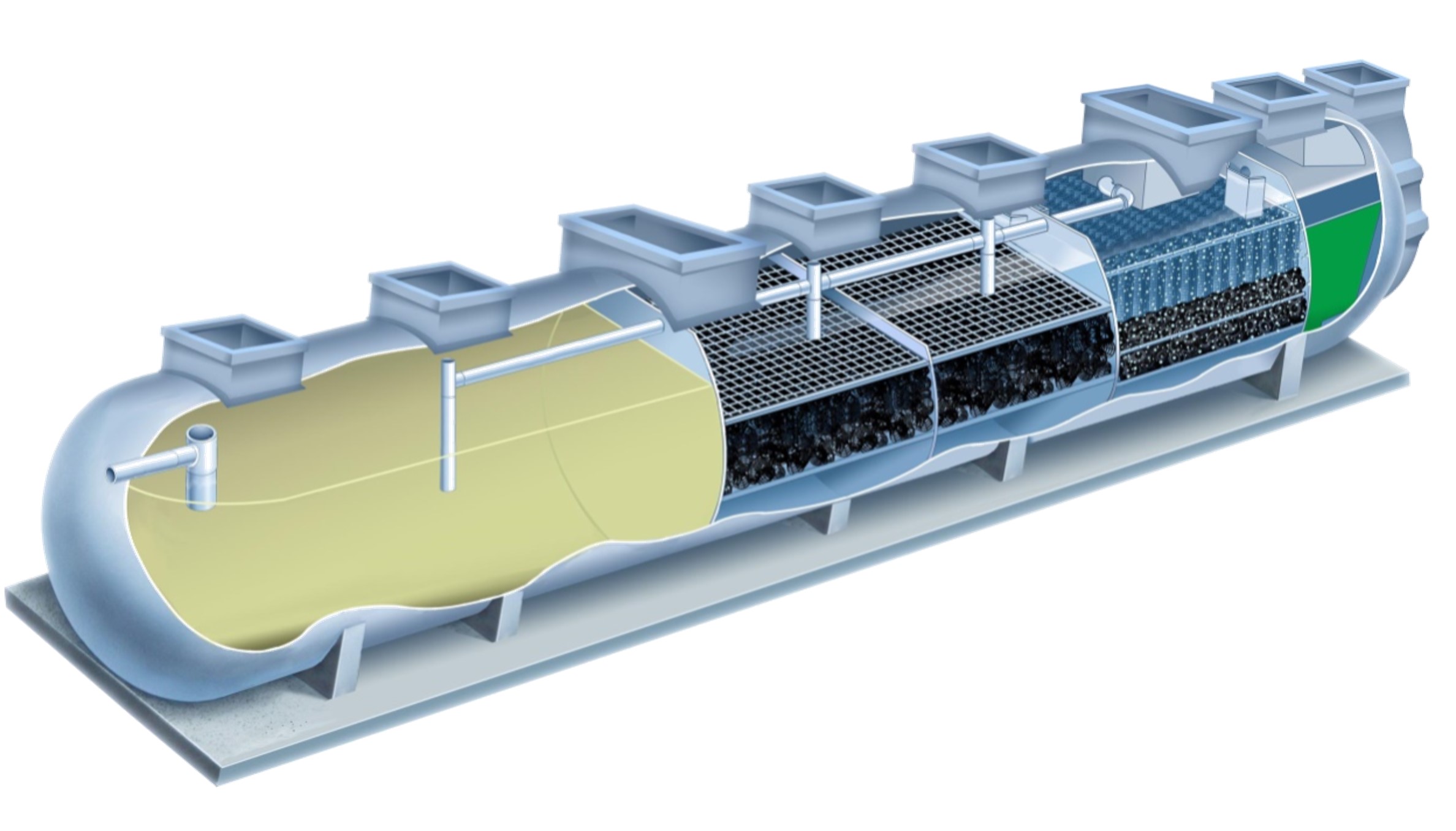
Solids and grease are separated.
Biological treatment without added air.
Contact media supplied with oxygen.
Final solids separation.
Airlift discharge of treated effluent.
4 → 1 · Water and sludge returnAn airlift returns them from clarification to sedimentation.
The CE6KG drawing identifies four treatment chambers. Point 5 marks effluent pumping within the final zone. Disinfection and effluent disposal are determined for each project.
CE SERIES · RESIDENTIAL
01A compact residential treatment system for domestic-strength wastewater.
Published dimensions are approximate and must not be used as construction dimensions. Daily energy consumption is a manufacturer reference value, not a guaranteed figure.
The manufacturer identifies this model as NSF/ANSI 40 certified. This certification does not constitute local regulatory approval.
CE SERIES · RESIDENTIAL
02A higher-capacity residential system in a single tank, for new installations or replacement of existing equipment.
Published dimensions are approximate and must not be used as construction dimensions. Daily energy consumption is a manufacturer reference value, not a guaranteed figure.
The manufacturer identifies this model as NSF/ANSI 40 certified. This certification does not constitute local regulatory approval.
CE SERIES · RESIDENTIAL
03The highest-capacity model in FujiClean USA's residential CE line.
Published dimensions are approximate and must not be used as construction dimensions. Daily energy consumption is a manufacturer reference value, not a guaranteed figure.
The manufacturer identifies this model as NSF/ANSI 40 certified. This certification does not constitute local regulatory approval.
CE SERIES · COMMERCIAL
04The smallest model in the commercial CE range, with built-in flow equalization.
Published dimensions are approximate and must not be used as construction dimensions. Daily energy consumption is a manufacturer reference value, not a guaranteed figure.
The manufacturer identifies this model as NSF/ANSI 40 certified. This certification does not constitute local regulatory approval.
Energy consumption and dimensions are taken from the linked commercial data sheet. A paragraph on the manufacturer's commercial webpage gives a different energy figure.
CE SERIES · COMMERCIAL
05A compact, single-tank system for treating domestic-strength wastewater at commercial sites.
Published dimensions are approximate and must not be used as construction dimensions. Daily energy consumption is a manufacturer reference value, not a guaranteed figure.
For this model, request performance documentation and confirm the certification applicable to the proposed configuration.
CE SERIES · COMMERCIAL
06Higher capacity for commercial projects, with two FujiMAC 150RII blowers.
Published dimensions are approximate and must not be used as construction dimensions. Daily energy consumption is a manufacturer reference value, not a guaranteed figure.
For this model, request performance documentation and confirm the certification applicable to the proposed configuration.
CE SERIES · COMMERCIAL
07The largest single unit in FujiClean USA's published CE range. Parallel configurations can be evaluated for projects requiring additional capacity.
Published dimensions are approximate and must not be used as construction dimensions. Daily energy consumption is a manufacturer reference value, not a guaranteed figure.
The manufacturer describes CE6KG as designed to meet NSF/ANSI 40 treatment requirements. This statement is not presented here as verified certification of the model.
Capacities are rated hydraulic flow rates for domestic-strength wastewater, not tank volumes. Metric conversions are approximate. System selection depends on flow rate, organic load and applicable regulations. Availability and configuration must be confirmed for each project.
01 / TECHNOLOGY IN FOCUS
Wastewater treatment systems using contact filtration for residential and commercial applications, with options for advanced nitrogen removal.
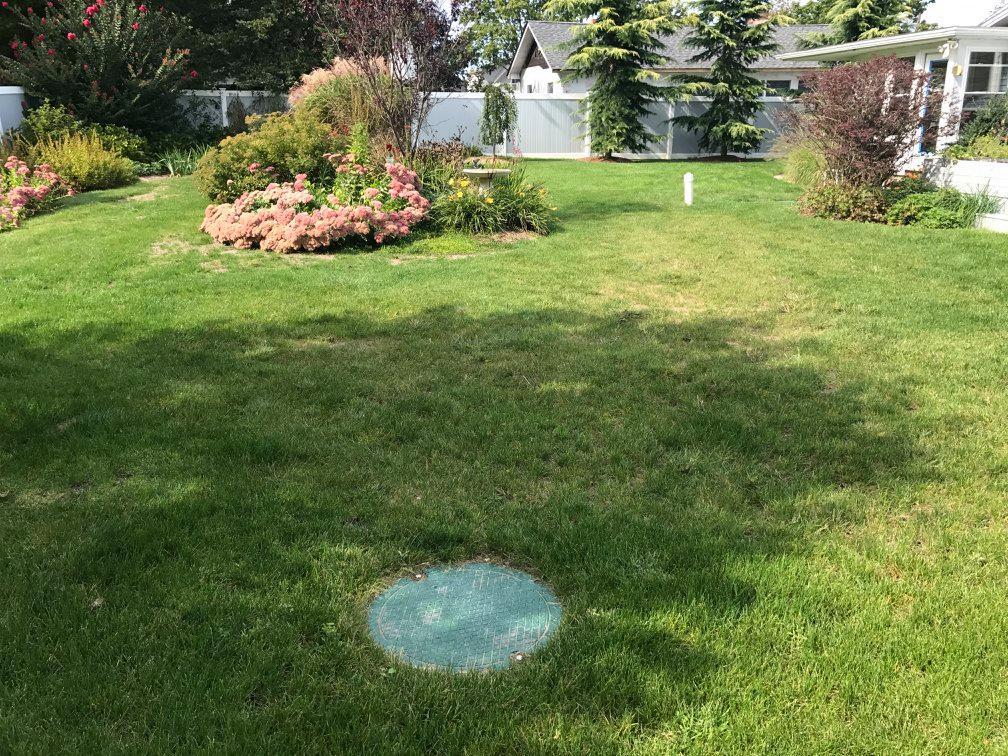
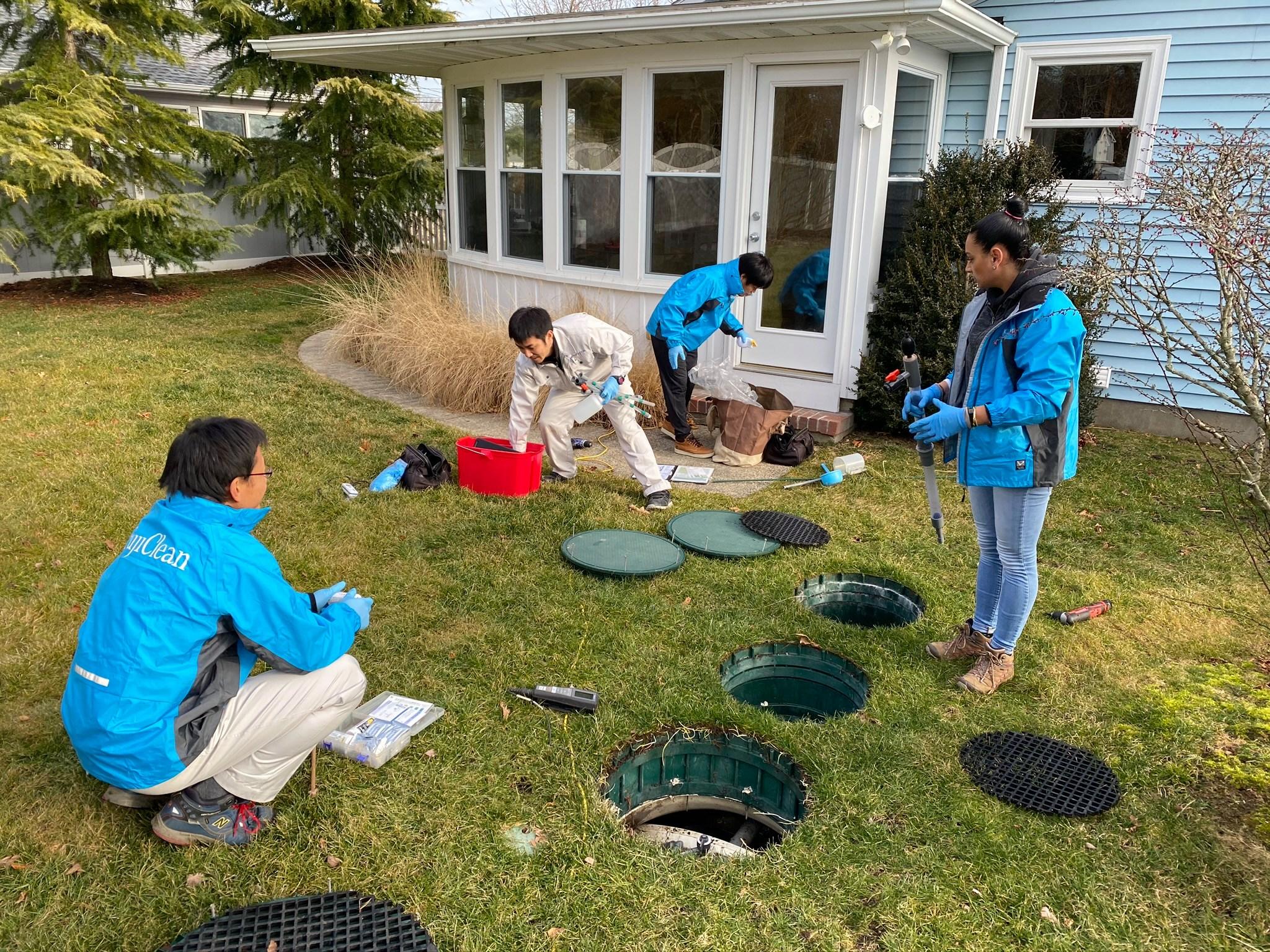
Manufacturer reference images, not Grupo Aberdeen projects. View official source
02 / FUJICLEAN DOCUMENTATION
These rated hydraulic capacities are published by FujiClean USA and do not replace project-specific system sizing. Manufacturer certifications alone do not constitute local regulatory approval. Availability, installation requirements and configuration must be confirmed.
Manufacturer documents may be available in English.
SUPPORT THROUGHOUT OPERATION
THE NEXT STEP
Tell us your business activity, location and what you need to resolve. For an existing system, include the model and the issue you have noticed. For a new system, share its intended use and any known flow rate or capacity.
Contact Grupo Aberdeen